


Get Well, SoonerSchedule Your Consultation Today
Contact Us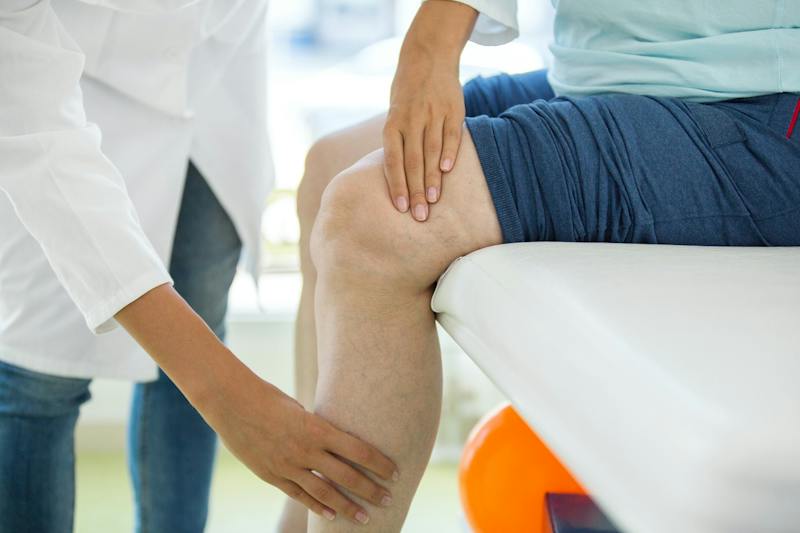
Recovering from ACL reconstruction takes most patients between six and twelve months before they're cleared to return to sport, though basic mobility usually returns within two to three weeks. Elite athletes with excellent rehabilitation compliance sometimes return sooner, but research consistently shows that returning too early, before nine months, is linked to a higher risk of re-injury. In this blog, Mr Rahul Kakar and Mr Louay Al-Mouazzen, Consultant Orthopaedic Surgeons at Elanic Hospital who both specialise in ACL reconstruction and are members of the European Society for Sports Traumatology, Knee Surgery and Arthroscopy (ESSKA), explain what patients should expect at each stage of recovery.
An ACL tear is one of the most common serious knee injuries in sport, and reconstruction is now the standard surgical treatment when the ligament cannot heal on its own. Recovery isn't a fixed calendar countdown; it's a series of milestones that your knee needs to meet before it's safe to move to the next stage.
What Happens in the First Two Weeks After ACL Surgery?
The first two weeks focus on controlling swelling, protecting the graft, and regaining basic knee extension. Most patients are walking with crutches within days and can usually stop using them by two to three weeks, once quadriceps control returns.
Typical early milestones include:
- Wound care and swelling management with ice, elevation, and compression
- Early physiotherapy focused on regaining full knee extension
- Gentle range-of-motion exercises, often starting on the ward
- A gradual reduction in crutch use as weight-bearing tolerance improves
How Does Physiotherapy Progress Over the First Three Months?
Physiotherapy in the first three months shifts from protecting the knee to rebuilding strength and control. Quadriceps activation is often the biggest early challenge, since many patients experience temporary muscle inhibition after surgery, even when the knee itself feels stable.
Structured rehabilitation typically introduces stationary cycling, closed-chain strengthening, and balance work during this period. Physiotherapists at this stage are less concerned with a set number of weeks and more concerned with whether specific strength and movement targets have been met before progressing.
When Can You Return to Running After ACL Reconstruction?
Most patients begin running again around the twelve-week mark, though this depends on meeting functional criteria rather than the calendar alone. Adequate quadriceps strength, full range of motion, and correct movement mechanics all need to be in place first.
Returning to running too soon, before these criteria are met, can place excess strain on the healing graft. Mr Kakar and Mr Al-Mouazzen's rehabilitation-focused approach at Elanic Hospital prioritises objective testing over guesswork when clearing patients for this stage.
When Is It Safe to Return to Pivoting Sports (Football, Rugby, Netball)?
Safe return to pivoting and cutting sports usually falls between nine and twelve months after surgery, and rarely before six months. A widely cited study found that returning to sport within six months carries roughly five times the risk of a second ACL injury compared with waiting eight to twelve months. Sports involving sudden changes of direction place the greatest strain on a reconstructed ligament, which is why the timeline for these activities is longer than for running or cycling.
Even after nine months, research shows many patients still carry measurable strength deficits despite feeling ready, which is why formal return-to-sport testing matters more than how the knee feels day to day.
What Factors Can Delay ACL Recovery?
Recovery speed varies considerably between patients, and several factors can extend the typical timeline:
- Graft type (hamstring, patellar tendon, or donor graft) and surgical technique
- Associated injuries to the meniscus, cartilage, or other knee ligaments
- Consistency and quality of physiotherapy attendance
- Pre-injury fitness and muscle strength
- Psychological readiness, including fear of re-injury, which research links to lower rates of returning to previous activity levels
Why Choose Elanic Hospital for ACL Reconstruction in Glasgow?
Mr Rahul Kakar leads governance for the Department of Trauma and Orthopaedics at NHS Tayside and uses enhanced recovery protocols that allow many joint replacement and knee arthroscopy patients to go home the same or next day. Mr Louay Al-Mouazzen completed three post-CCT knee fellowships across Cardiff, Oswestry, and Exeter, focusing specifically on ligament, cartilage, and meniscus surgery, and holds the ESSKA European Travelling Osteotomy Fellowship. Between them, Elanic Hospital's knee team combines high-volume NHS experience with a private setting geared toward efficient, structured rehabilitation.
FAQs About ACL Reconstruction Recovery
Will I need a knee brace after ACL surgery? Not routinely. Many surgeons no longer use a brace as standard after ACL reconstruction, relying instead on early physiotherapy to protect the knee while the range of motion returns.
When can I drive again after ACL reconstruction? Most patients can return to driving once they can comfortably and safely control the pedals, typically once crutches are no longer needed and knee control has returned, usually around two to four weeks.
Is ACL reconstruction painful? Some discomfort and swelling are normal in the first few weeks, but this is well managed with pain relief and physiotherapy. Pain generally settles quickly once early rehabilitation milestones are met.
What is the success rate of ACL reconstruction? Most patients return to some level of sport or activity after ACL reconstruction, though the proportion returning to their exact pre-injury level of competitive sport is lower, which is why structured, criteria-based rehabilitation matters so much.
Ready to Discuss ACL Reconstruction? Elanic Hospital Is Here to Help
If you've suffered an ACL injury and want a clear, realistic recovery plan, Mr. Rahul Kakar and Mr. Louay Al-Mouazzen at Elanic Hospital in Glasgow can talk you through your options at a consultation. Their approach draws on structured, criteria-based rehabilitation rather than guesswork, helping you understand exactly what your knee needs to meet at each stage before returning to the activities you love. Contact Elanic Hospital to book a consultation and take the first step toward a safe, well-paced recovery.